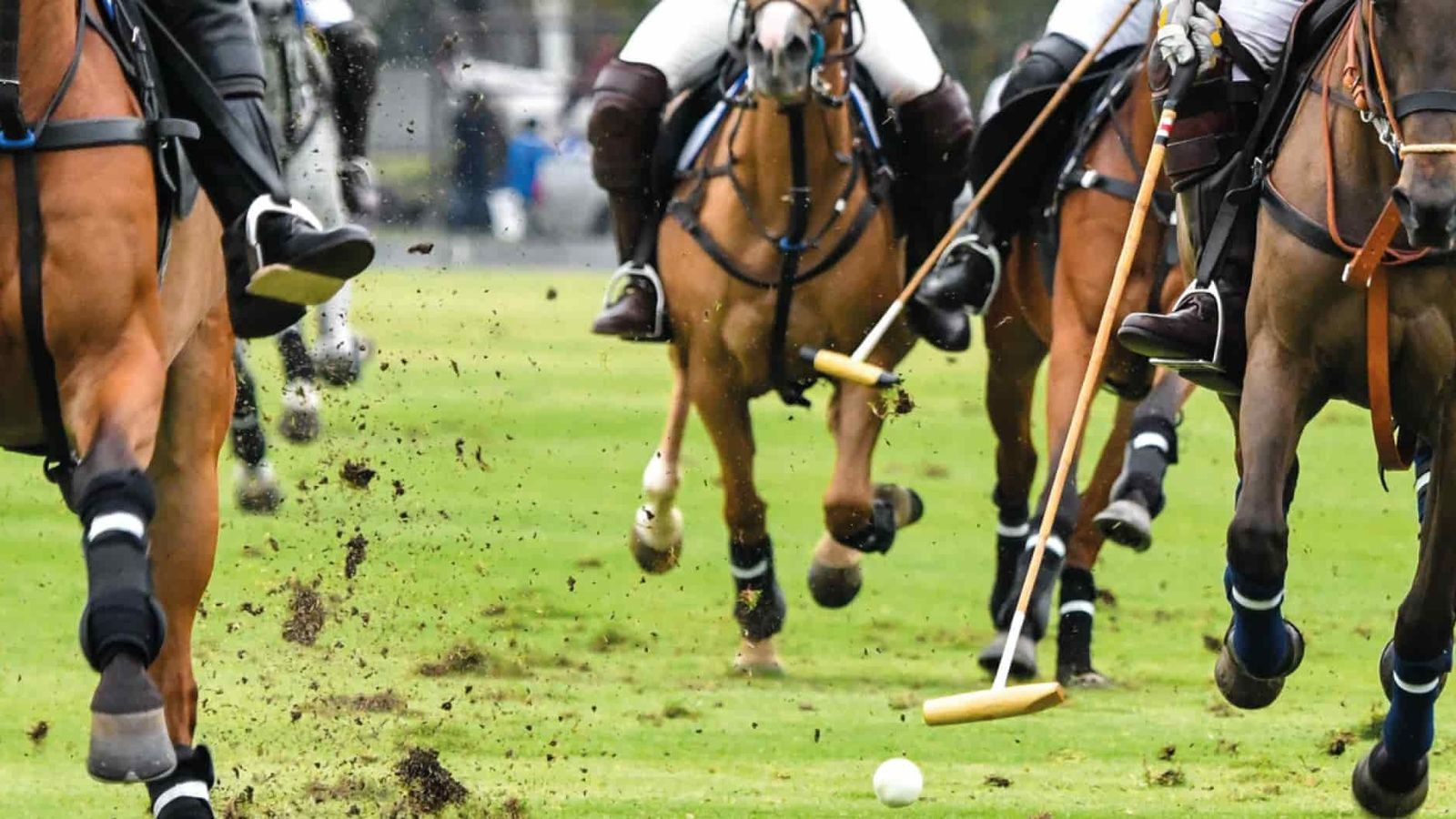
The game
Thegame
Four riders a side, played in periods of seven minutes called chukkas.
How polo is played
Polo is one of the oldest team sports in the world. The principles of the game are set out below.
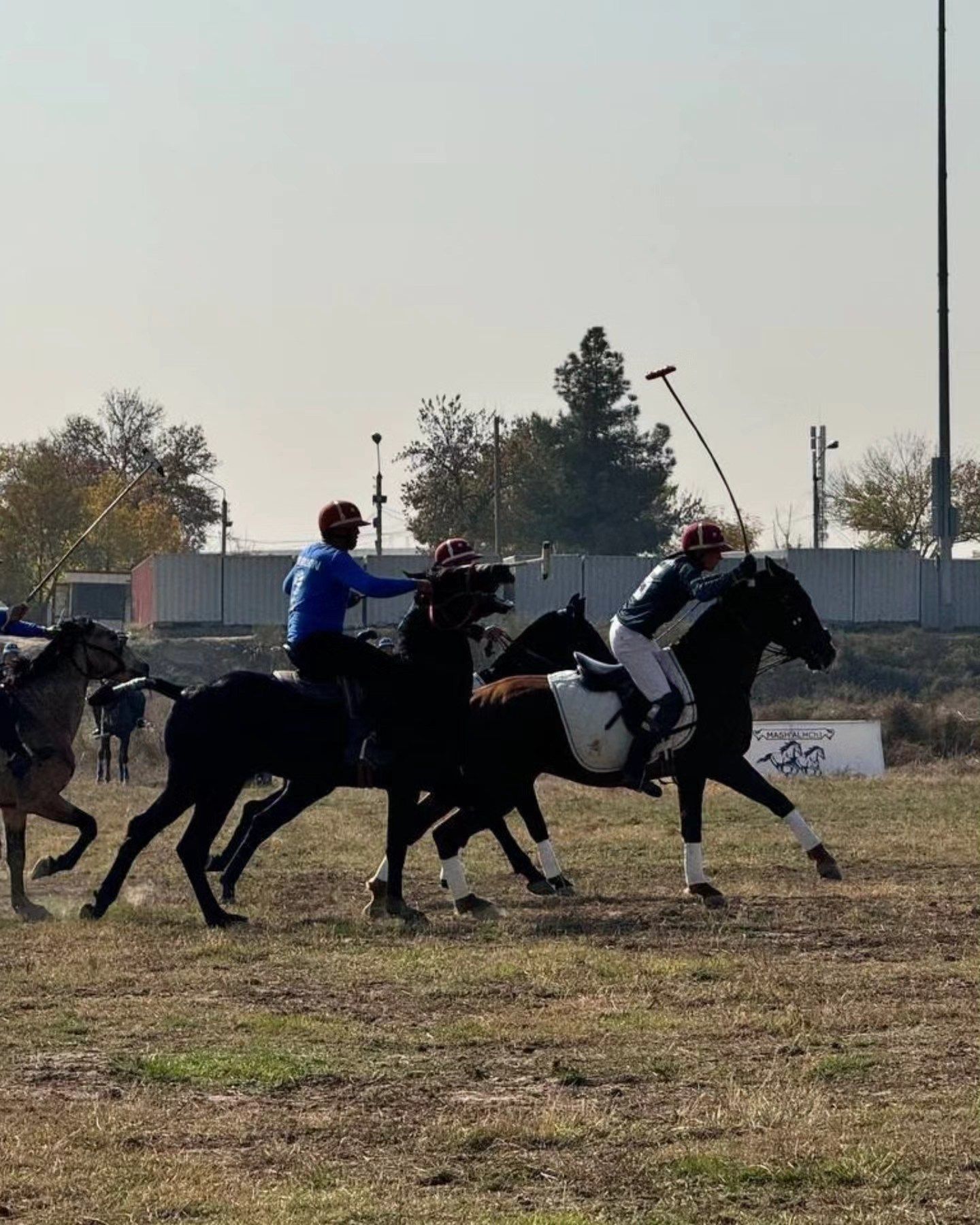
In outdoor polo each team has four riders, numbered 1 to 4 from attack to defence. Arena polo is played three a side.
A match is split into periods called chukkas, each seven minutes of play. Most matches run four to six chukkas.
The ball's path creates a right of way. Most fouls are about crossing that line in front of another rider.
Two umpires ride on the field with the players, and a referee on the sideline settles any disagreement between them.
Match length, field size and equipment vary by discipline and level. The federation plays to FIP rules.
Five ways to play
The federation runs five forms of the game, each with its own season and its own players.
- 01Snow poloMountain fields, winter season
- 02Arena poloEnclosed arena, three a side
- 03Traditional poloRooted in Uzbek horse culture
- 04Youth poloGrassroots programmes and schools
- 05Women's polo14 teams
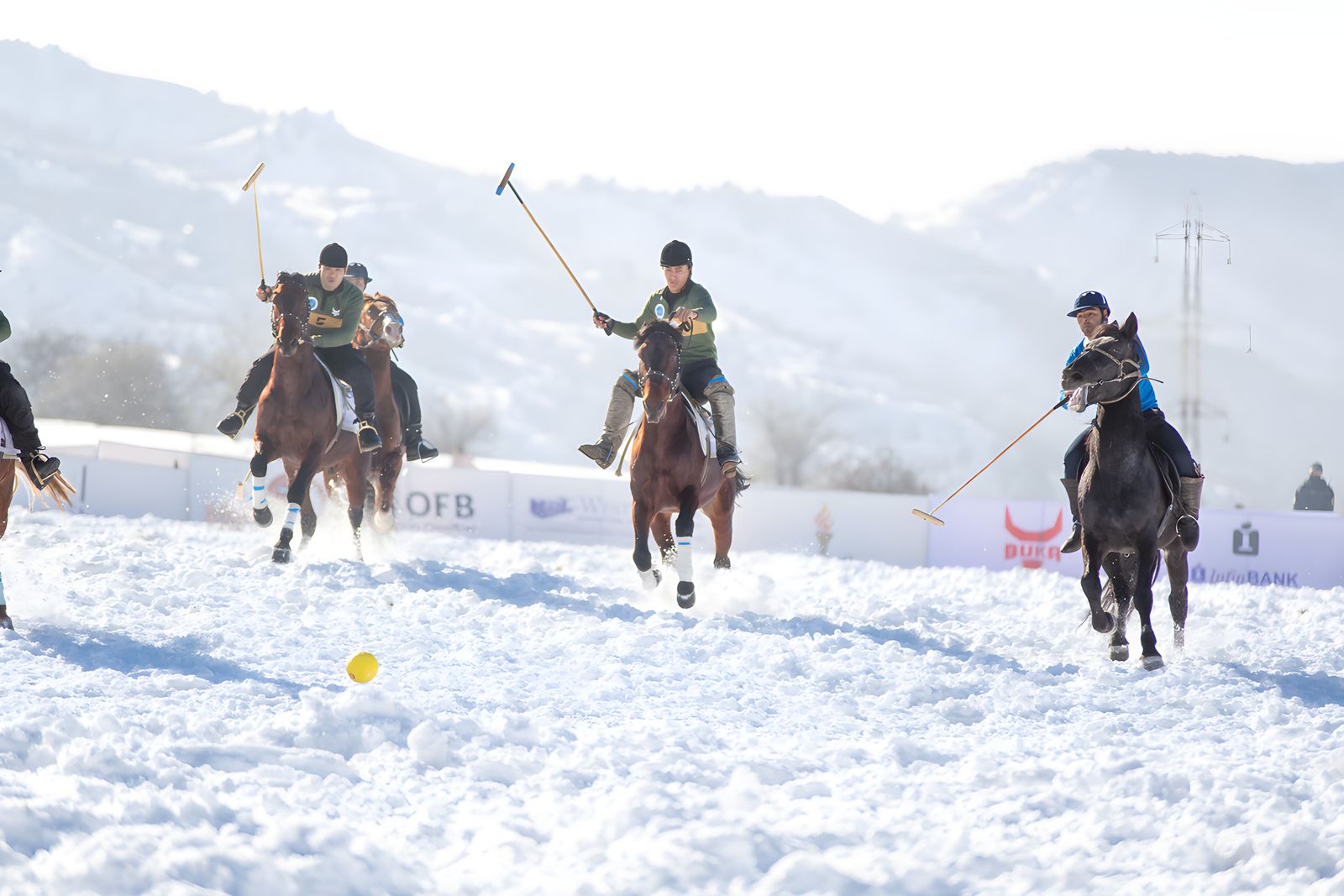
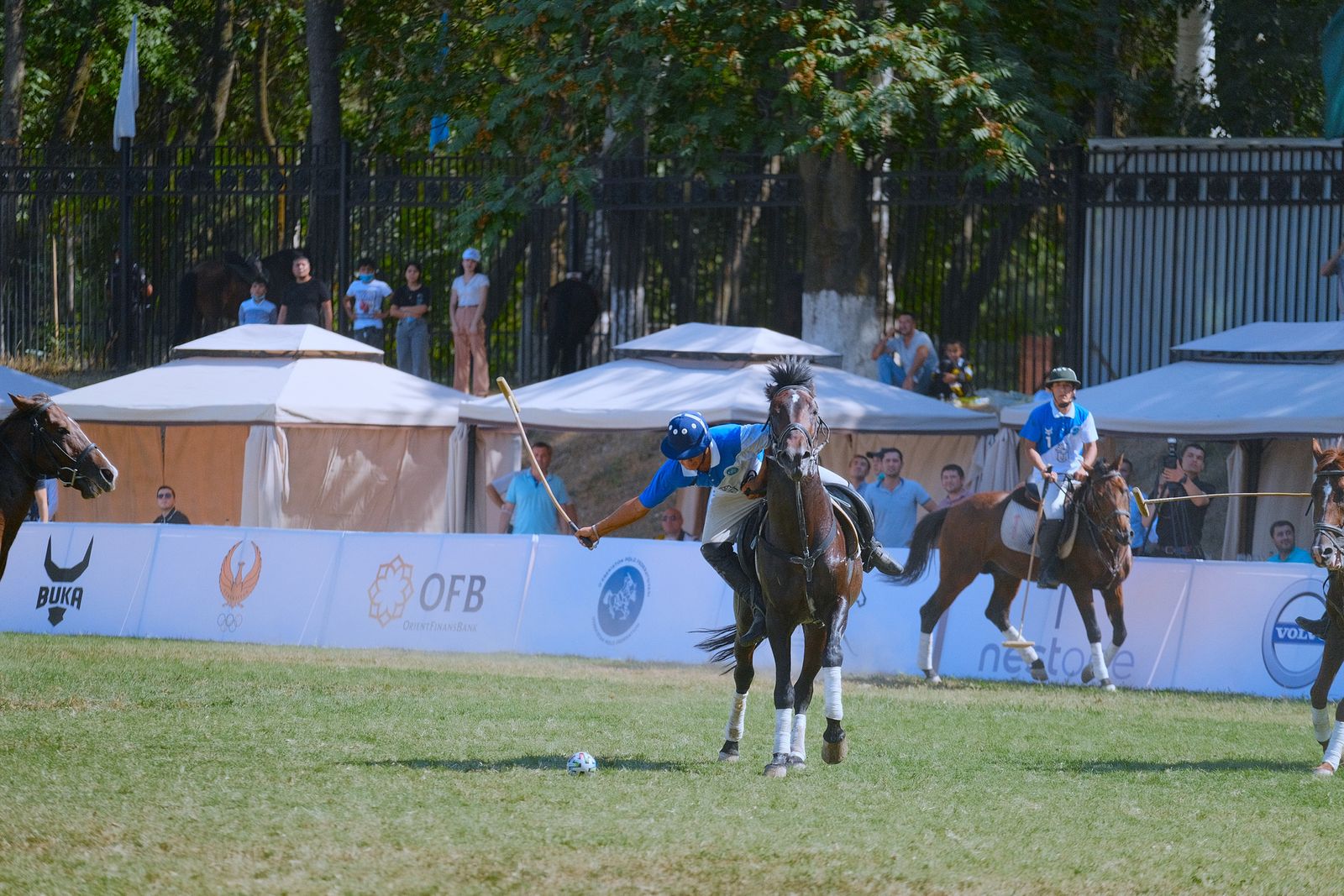
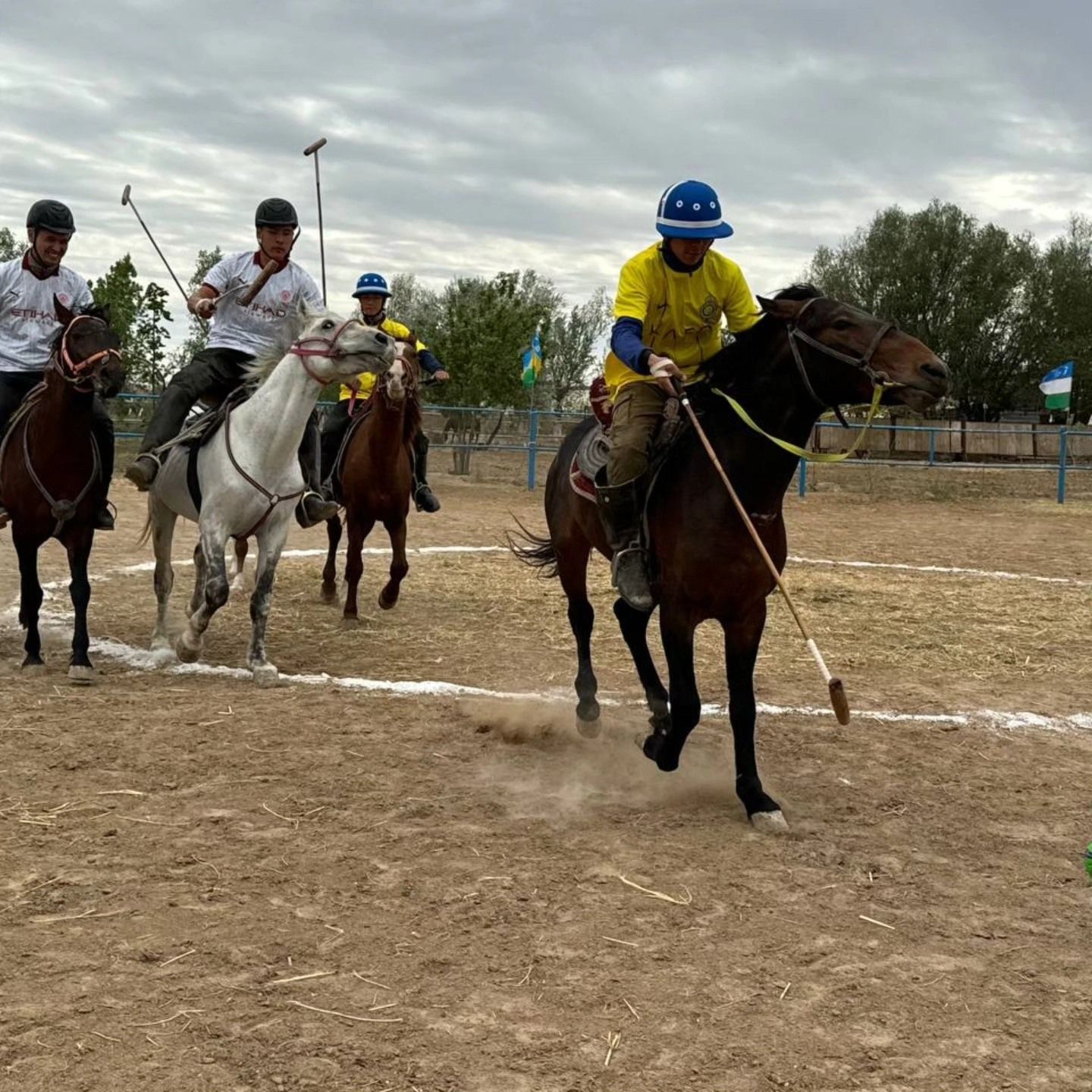
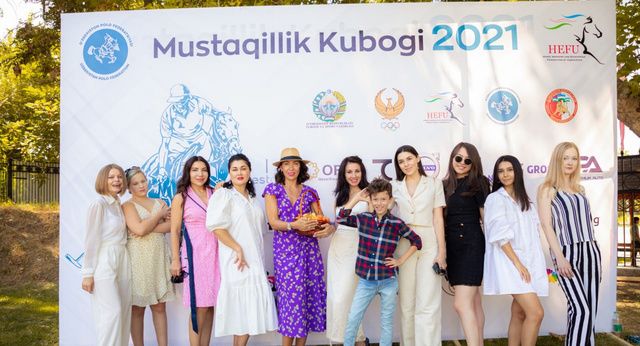
- Snow polo
- Three a side on packed snow, with a larger, lighter ball. Played in winter at Amirsoy in the mountains above Tashkent.
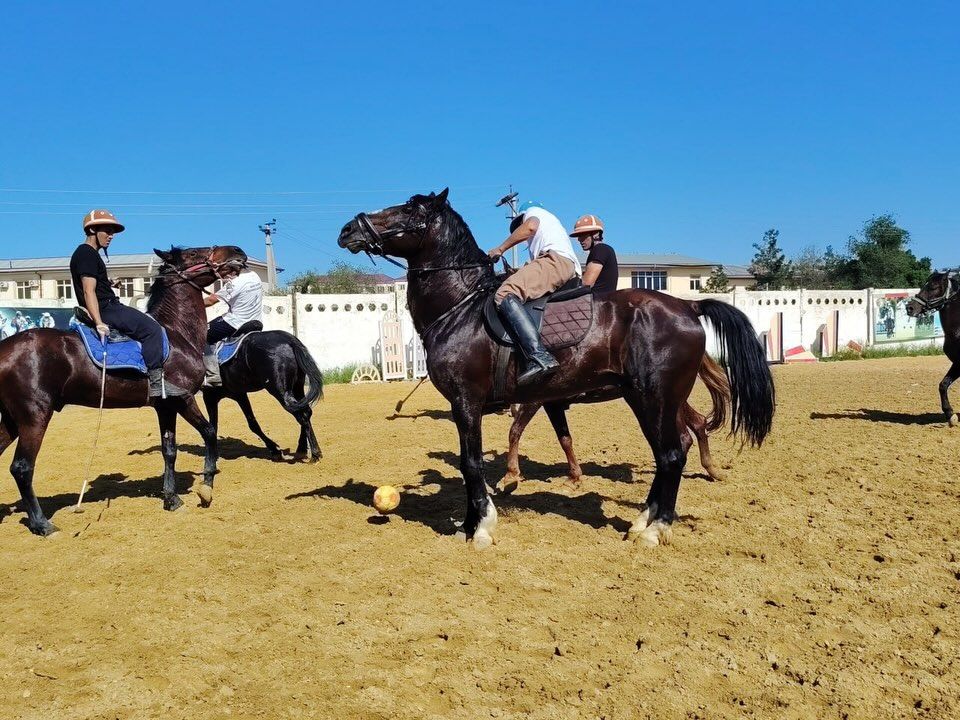
- Arena polo
- Played in an enclosed arena with walls, three players a side, over a shorter match. It can be played year round.
- Traditional polo
- Outdoor polo on grass, four a side, played in the spirit of the region's centuries-old horse-and-ball games.
- Youth polo
- Five youth teams learn to ride, to play and to care for the horse.
- Women's polo
- Fourteen women's teams play in Uzbekistan.
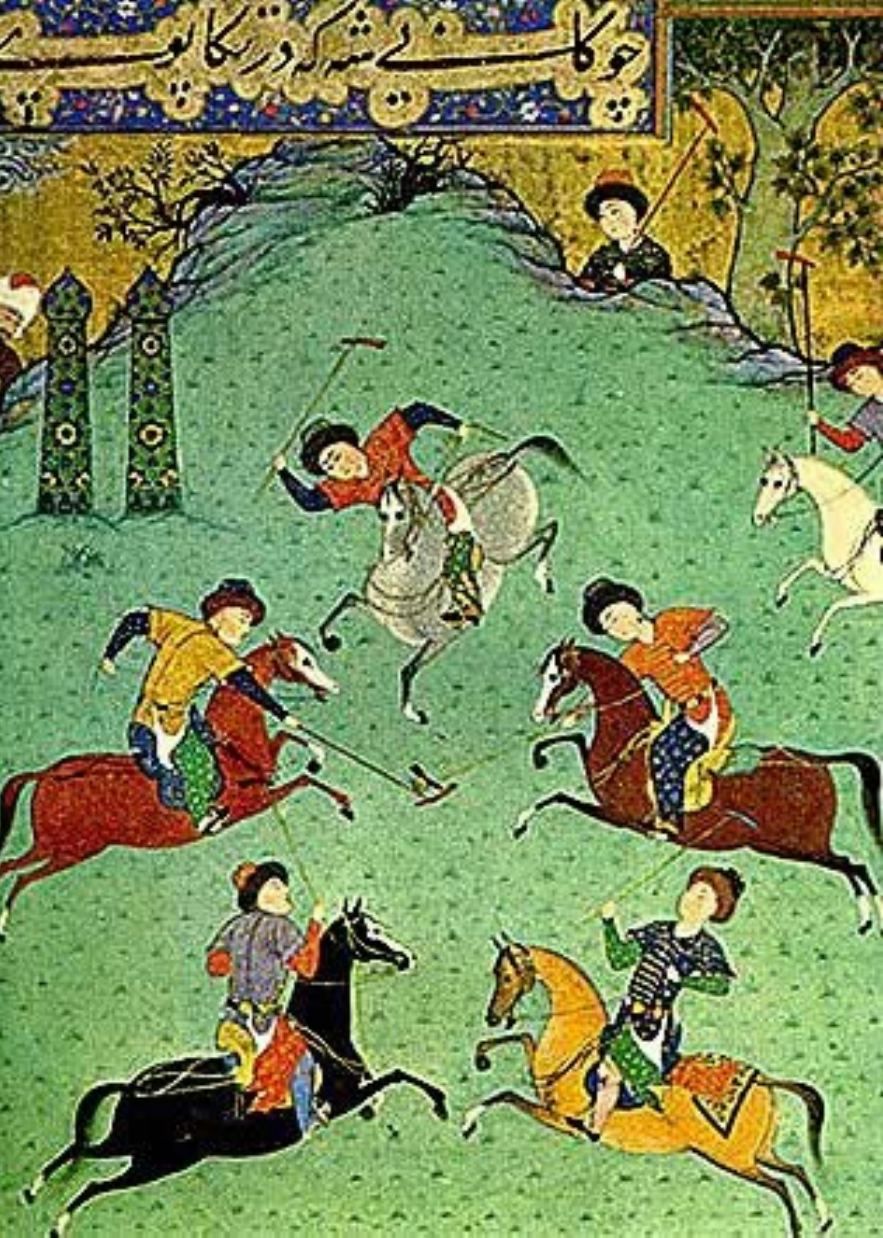
A game with deep roots in the region
Games with horse, stick and ball were played across Persia and Central Asia for centuries before modern polo was written down. Here the game was called chovgan, and it appears in miniatures and poetry of the region.
The federation sees modern polo as the continuation of that tradition, played to international rules.
The horse comes first
There is no polo without the horse. Horse welfare is one of the federation's five core values, and it shapes how we train, compete and run events.
Horses rest and are changed between chukkas, are checked before and after play, and are cared for by trained grooms. Training grooms is one of the federation's stated goals.
Learning the game
The Academy runs programmes for beginners, young riders and future coaches and umpires.
The Academy